
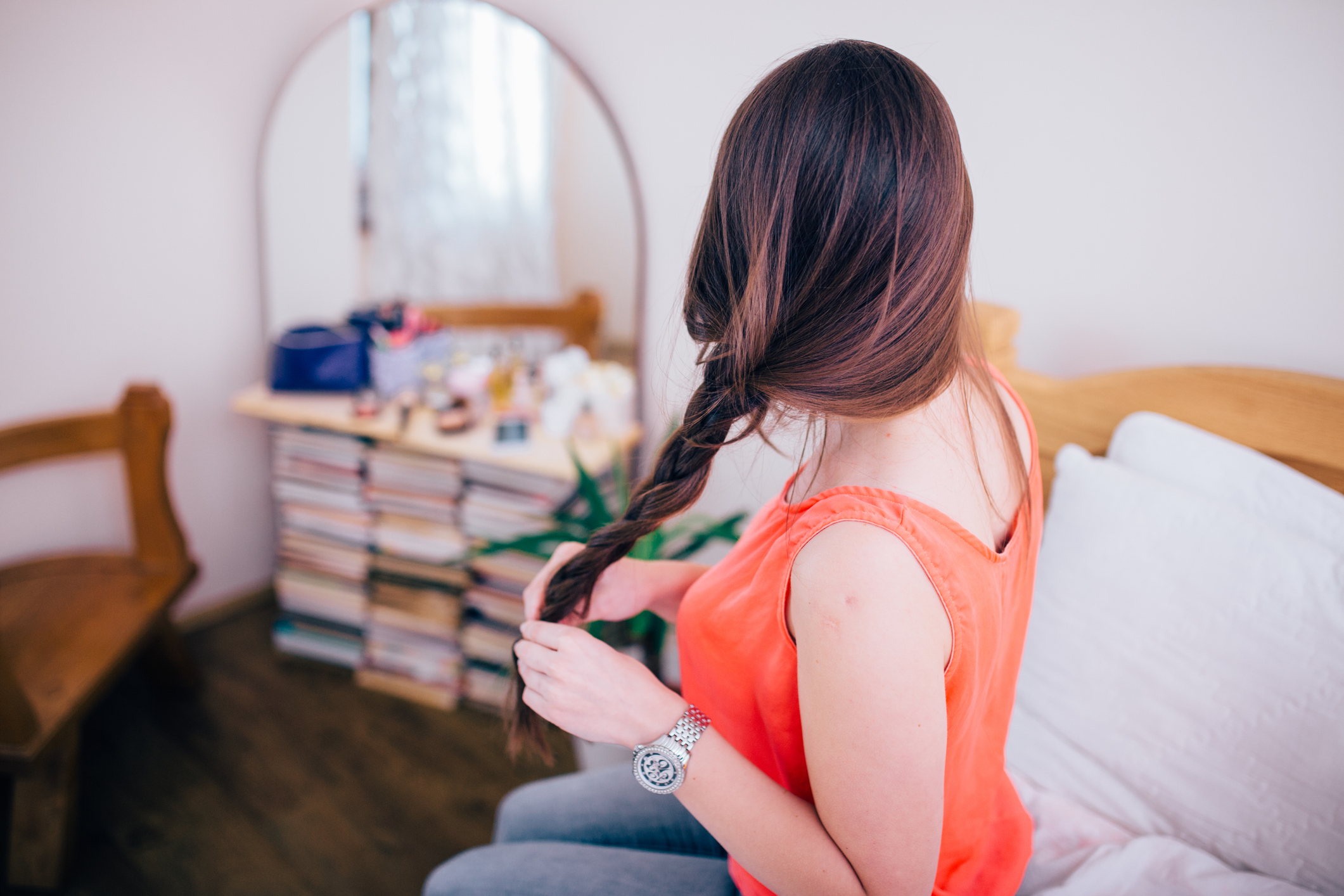
A loose braid before bed paired with a satin pillowcase is one of the easiest ways to protect your hair overnight. This simple habit helps reduce friction, prevent tangles, minimize breakage, and keep hair smoother by morning.
Why Your Hair Needs Protection at Night
Most of us spend seven to eight hours a night tossing and turning on our pillows. Every time your head moves, your hair rubs against the fabric underneath it. Over time, that constant friction can rough up the cuticle, which leads to tangles, frizz, split ends, and breakage. If you’ve ever woken up with knots at the nape of your neck or a halo of frizz around your hairline, friction is usually the reason.
The good news is that protecting your hair overnight doesn’t take much time or money. Two simple changes, a loose braid and a satin pillowcase, can make a real difference in how your hair looks and feels when you wake up.
Why a Satin Pillowcase Makes a Difference
Cotton pillowcases are soft to the touch, but the fibers grab the hair and absorb moisture. That pulls oils and hydration out of your strands while you sleep, leaving hair drier and more prone to frizz by morning.
A satin pillowcase has a smooth, slick surface, so your hair glides across it instead of catching. Less friction means fewer tangles, less breakage, and smoother hair. Satin also absorbs less moisture than cotton, which helps your hair hold on to its natural oils and any leave-in conditioner you applied before bed.
A satin pillowcase is especially helpful if you have curly hair, color-treated hair, fine hair, or hair that tends to be dry. It can also help your blowout or keratin treatment look smoother for longer between salon visits.
Why a Loose Braid Works
Sleeping with your hair down leaves it free to twist, tangle, and rub against your pillow all night. A loose braid keeps your strands together and contained, so there’s less movement and less friction.
The key word is loose. A braid that’s too tight can pull on your hairline and put stress on your strands, which can cause breakage over time. Your braid should feel comfortable, never tight or tugging at your scalp.
A loose braid has another bonus: you’ll often wake up with soft, natural waves when you take it out.
How to Braid Your Hair for Sleep
- Start with dry or mostly dry hair. Sleeping on soaking wet hair can lead to tangles and breakage.
- Gently detangle with a wide-tooth comb or your fingers, starting at the ends and working up.
- Apply a small amount of leave-in conditioner or a light oil to your mid-lengths and ends.
- Make one loose braid down the back, or two loose braids if your hair is thick or long.
- Secure the end with a soft scrunchie or a fabric-covered hair tie. Avoid rubber bands and ties with metal pieces.
- Rest your head on your satin pillowcase and let it do the rest.
More Ways to Protect Your Hair Overnight
Curly hair is naturally drier and more prone to breakage, so nighttime protection matters even more. The American Academy of Dermatology lists caring for your hair while you sleep as one of its curly hair tips, and a satin pillowcase is one of the easiest ways to do that.
If you wear extensions, braid them loosely along with your natural hair so they don’t tangle or mat overnight.
If your hair is short, a satin bonnet or satin scarf can give you the same protection.
A satin pillowcase works best alongside a good routine: gentle shampoo, regular conditioning, heat protection before styling, and regular trims to keep split ends from traveling up the hair.
Small Habits, Healthier Hair
Healthy hair isn’t only about what happens in the salon chair. Small habits at home, like braiding your hair loosely and switching to a satin pillowcase, protect your hair every single night. Over time, you’ll notice less breakage, fewer tangles, and smoother, shinier hair.
If you’re dealing with frizz or breakage and aren’t sure where to start, ask about it at your next visit to Salon International. We’re always happy to help you build a routine that keeps your hair healthy between appointments.

